Thursday, January 17, 2013

Mormon fairy tales

One of the problems with Mormon culture is the pervasive use of fairy tales. You can see it popping up in lots of places, but where you see it the most is with the Young Women (the female teenagers). This is probably the most dangerous place it could be at, too.

The first place where I remember seeing it is in a popular (and adorable) Mormon movie called Charly (IMDB "Charly"). This movie is about Charly, a worldly woman who comes to Salt Lake City from New York City to escape deciding whether or not to accept the proposal of her boyfriend. Even though she's living with him, she's confused. In SLC, the first person she meets is Sam, who is an Eagle Scout and Return Missionary and he tucks in his polo shirt into his jeans and he is just waiting to teach this heathen how to pray. They go on a date, and she accuses him of believing in fairy tales, complete with a castle (the SLC temple). I guess he believes in fairy tales because he believes in this picture perfect idea of marriage and soul mates and etc. (I haven't watched the movie enough to be able to quote lines), while Charly is much more skeptical and pessimistic.

This reference to temple marriage as a fairy tale isn't that bad, though, because it's a criticism on the part of someone who is not LDS (at least her character isn't. I suspect that the actress is). It's more of a statement that LDS members believe in a more innocent, less messy, concept of love and marriage.

Church members must've taken this idea and run with it. I, personally, could not escape it when I was in the Young Women's program.

You start seeing crowns and princess references everywhere, like this picture that I got from a random blog. I think maybe the intent was to teach girls self-worth, something that I'm a big fan of. Girls should feel special and divine, like princesses. I believe they should feel exactly like the girl in The Little Princess by Frances Hodges Burnett.

The problem, for me, arrises with the "Remember who you are," part, conveniently starred for emphasis. Instead of being like, 'hey, don't let high school bullies and regular teenage insecurities get you down. You're great the way you are,' it becomes, 'hey, don't make bad choices because you're a better person than that.' To me, it feels more like a guilt trip than an esteem boost.

Then there's this wonderful picture to the right. This is a picture of an LDS temple somewhere, not sure which one. The idea of the slogan is supposed to be 'if you can't marry me in the temple, then I'm not going to even bother with you. So you better shape up, because I need a man.' So again, we're doing the guilt trip thing, except this time we're using our "womanly wiles" to try to "flirt to convert." Which is flat-out TERRIBLE.

The Church has always had a very strong emphasis on marrying someone who is LDS and someone who is temple-worthy. It makes sense that they would want you to marry someone with the same belief system as you, because not only can you produce lots of LDS babies, but it does also make life a lot easier when you can agree on something so huge. That part does make sense. The temple thing comes because a core part of LDS beliefs is getting sealed in the temple together. Okay, again, that works.

By why are we emphasizing this so strongly that we are teaching young girls to refuse to even consider a man of another faith? How wrong is that? There are PLENTY of good men who aren't LDS, and plenty of horrible ones who are LDS. Having this belief system and having a temple recommend does not automatically make you a good person, or a good husband.

So lots of leaders and teachers of the Church have created this culture of teaching girls that they are princesses in order to keep them in line. Other problems that are arising? For one, we are again pounding into young teenagers' heads that they should be thinking about marriage ALL OF THE TIME. I definitely experienced this personally. I was so convinced that I was going to marry the first boy that I kissed that I got way too intense way too quickly for this poor sixteen-year-old boy and scared him away.

Young LDS girls get it into their heads that they need to have the fairy tale ending. This cute graphic contains a quote made by Dieter F. Uchtdorf, who has one of the highest and most respected leadership positions in the LDS church. This is a cute and hopeful quote that girls take to heart, and instead of thinking 'I have so much divine potential. I should work hard at my religious studies, as well as other wholesome things, so that I can be happy in self-improvement,' they internalize junk like this into 'where is my prince to sweep me off of my feet?!?! As soon as some wonderful man says all the romantic things that actors say in chick flicks, then I can be fully happy in my life.' Marriage gets warped into something easy and only happy, instead of the reality that it is hard and takes work. True love becomes a race, instead of becoming a lucky part of life that will come along when it is meant to.

And for me, church activities became all about opportunities to talk to and look at boys, instead of a place where I could increase my faith and friendships.

Not to mention, historically, princesses were commodities that were basically "sold" away as a way of brokering peace with neighboring monarchies. They were expected to look good, produce heirs, and sew useless things. Is this archaic idea something we really want to ingrain into impressionable girls for the sake of a clever metaphor? I wouldn't think so.

Wednesday, January 16, 2013

Books women should read

I did it again. I saw an awesome idea for a book list on someone else's blog and decided to add my own opinions. Here's the original blog: 10 Books Every Woman Should Read.

I agreed with some on her list and will be reading some of the others that I haven't yet. But I also thought she limited herself with 10, and want to add some more.


  1. Pride and Prejudice by Jane Austen - OMG this book. If you want all the butterflies of a perfect love, read this. Plus, awesome and strong heroine. 
  2. Sense and Sensibility by Jane Austen - Again, OMG. Brilliantly written, brilliant protagonists. Not to mention, I feel like what the characters go through is something lots of women can relate to.
  3. Anne of Green Gables by L. M. Montgomery - There are very few characters as endearing as Anne Shirley. Like the first two, the time period might throw you off, but her trials are still ones that you can very easily relate to.
  4. The Secret Life of Bees by Sue Monk Kidd - Beautifully written. This book made me think a lot about life and death and the relationships I have with the women around me.
  5. The Princess Diaries by Meg Cabot - Princess Mia is absolutely one of my most favorite characters ever. She is HILARIOUS, and, again, very easy to relate to. (Check out other series by Meg Cabot. She very entertaining!)
  6. The Joy Luck Club by Amy Tan - This is a book about mother-daughter relationships and all of the ups and downs that they endure while growing older. Another one that makes you reflect, and maybe also appreciate and understand your mother better. Plus, an awesome insight into Chinese culture, something I don't get exposed to a lot.
  7. A Little Princess by Frances Hodges Burnett - Although this book is about a very young, romantic girl in a very innocent time of life, it's a great lesson on self-esteem and knowing your worth no matter how bad life is.
  8. Little Women by Louisa May Alcott - When Louisa was a young, ambitious writer, she started out trying to write daring, exotic, creative, and romantic adventures about places in Europe she had never been to. After a while, she became convinced that the real story was in her own home, and she should instead write about what she knows. What followed is an incredible story of familial relationships, and the challenges that come when you and your sisters grow up. I feel like in this stage of life with my three sisters now making their big life decisions, it is incredibly relevant despite having been written in the 19th century.
  9. Jane Eyre by Charlotte Bronte - I've never really been a fan of this book. Mr. Rochester throwing himself on the couch in protest of his love is really just too much for me. But I was recently forced to reread this book in an English class and realized just how feminist Jane is. The main plot of the book may be about a romance, but some of her thoughts reveals just how much she yearns as a woman for the same adventures and control over her life that men have. She was very ahead of her time.
  10. The Sisterhood of the Traveling Pants by Ann Brashares - This wonderful series follows the friendships of four young girls, as well as touching on the relationships they have with sisters, mothers, step-family, boyfriends, etc. The girls learn how to remain friends despite physical distance, different experiences, and growing older. 
Other writers that deserve honorable mention: Emily Bronte, Sylvia Plath, Sophie Kinsella, Kathryn Stockett, Sarah Dessen, and Laurie Halse Anderson.

Tuesday, January 15, 2013

Game of Thrones

Colby and I are currently obsessed with Game of Thrones. I got hooked onto the HBO series (because I absolutely love dramas that contain soft-core porn and Lord of the Rings-like settings), and then I convinced Colby to read the books. He quickly went from the books to the show. I guess it's fun to compare and contrast them.

If you've never seen it, just watch this intro:


If that epicness and awesome map art and Medevalish music doesn't get you going ... I don't know what will.

The thing that's amazing about this franchise is FUCKING EVERYTHING.

Okay, I'll scale back a little.

The thing that most impresses me about this story is the characters. The characters are amazing. Of course you've got the characters you love to hate, and the ones you love to love. But what truly impresses about them is how ROUND they are. These are some of the most fleshed out characters. It helps that the books tell a different character's perspective with each chapter; that also helps the story to stay interesting and for the audience to know all stories, even though the characters are often very physically far from each other. 

These characters all have wonderful depth. Take the Starks: Ned Stark, the brave and honorable father and husband, has always been loyal to his wife, Catelyn, except the one time he went to war and thought he'd never see her again and had a child with a prostitute. He does the honorable thing and brings his bastard son, John Snow, back with him and raises him the same as his other children. Catelyn, who is praised for being the perfect mother figure, actually hates John Snow. Though she is one of the "good guys," she snubs his character and treats him like an evil step-mother would. 

Then there's the Lannisters. The Lannisters would probably be the "bad guys," except for Tyrion, who is not only smart, but also very ahead of his time. Tyrion is one of the most loved characters of the franchise, which is why it is so hard to want the utter defeat of the Lannister family. His sister, Cersei, is a fascinatingly complex character. She is an absolute lioness, and, coupled with the fact that she is happily in an incestuous relationship with her twin brother, makes her an antagonist. However, she is also such a loving mother that it comes to a fault. The part I love best about her is her behavior towards Sansa Stark. To her, Sansa is the daughter of one of her enemies. However, because Sansa is betrothed to her son, Joffrey, she frequently takes pity on the young teenager.

I don't think I've given away anything, and even if I have, you still have to check out this show. I warn you that it is one of the most graphic shows I've ever seen, both in terms of gruesome, bloody violence and sexual situations and nudity. In fact, this funny chart shows that: 


Yup.

This show is so full of twists and surprises, and there's more to come! Colby is ahead of me in the story because he's reading the books, and I have to YELL AT HIM to keep him from spoiling it for me!

Go watch!

Monday, January 14, 2013

Women in Mormonism

I did actually start reading The Lonely Polygamist by Brady Udall. I'm already two hundred pages into it because it's a fairly easy read. It's fun, though, to read about places I know, such as Cedar City and St. George. And Udall made the distinction between the LDS and fLDS churches, and that's all I need to approve anything written about polygamy ever.

Because I'm a Mormon who is fucking sick of polygamy jokes. Grrrr.

But the reason why I bring this book up is because there was a line in it about the Relief Society. Something about gossiping while hiding behind quilting and emergency preparedness. This was said about the fLDS church, but I feel like it also applies to the LDS church, too - applies in two ways: (1) of course a gaggle of women who meet together are definitely going to gossip, and (2) this reflects the poor attitude that many have towards the Relief Society.

This started me on a long thought process of how the Relief Society is often looked down on. I remember once when I was probably about twelve, a Sunday School teacher of mine made the comment about all the Relief Society does is get together and cry. I was old enough to be offended, but not old enough to be able to say anything.

It feels like in some ways, by some people, this poor attitude of looking down on the weak, emotional women still exists. Of course, I do not feel like all men in the Church feel that way. I mean, those are their wives, and many of them publicly praise their spouses for their strength and spirit (though many only mean their strength and spirit in the home, being a wife, mother, and homemaker). I have met many LDS men whom I have come to admire because they have a deep respect for their wives.

But that doesn't mean that people still don't look down at the Relief Society. And I wonder why that is. I'm in a new ward now, a married BYU ward (yikes!), and might be going somewhat regularly, so maybe I'll figure it out.

I think possibly one of the reasons, and this applies for the Young Women's program as well, is the things the women choose to concentrate on. Generally, the Relief Society is taught the same lessons from the same manuals as the Elder's Quorums. Same goes for the Young Women and Young Men. The difference in the lessons for the YW and YM is that the YW's lessons always go back to marriage, chastity, and motherhood, while the YM concentrate on going on a mission, respecting their priesthood responsibilities, and leadership.

My RS lesson yesterday was on getting as much education as possible, which is a great lesson. I was happy about it. Except most of the "education" they were using as examples (as well as their majors, since most are still students), was learning instruments or how to crochet. At different times, it was brought up all the ways that children are affected by your education, and how to teach children to love learning.

None of those things are inherently wrong. Having skills like playing an instrument or crocheting is awesome and useful. Thinking about your children, especially when a large number of these women had infants or are pregnant, is not a bad thing.

I'm just wondering if any of that factored into the lesson that the men had. Do they somehow involve fatherhood or being a husband in every single lesson they have? I hope they do, considering that the Church wants to emphasize the importance of family over anything else to both sexes.

The Relief Society was started by strong pioneer women to be a place where the women of the church could be together to learn about their divine heritage and become stronger with the help of one another. It really shouldn't be looked down on just because they are a group of women.

Saturday, January 12, 2013

Book resolutions for 2013

In my last entry, I talked about how I wanted to ditch stupid resolutions that no one really follows through with anyway and make a reading list instead. Guys, I really need to do this. I own probably 300 books (I don't know, I don't count) and at least a fourth of those I haven't read yet. I'm a book whore! I just love going into book stores and looking at them all, and I always HAVE to own the books I love. It's a problem, really, one I'm working on by going to used bookstores and the library more. I'm sorry, Barnes & Noble. I love you and I miss you, but you're also a corporate company and your books are super expensive.

Anyway, books (or authors) I have to read this year:


  1. Amy Tan. I've bought about six of her books from Deseret Industries (for those not living in Utah, DI is like Salvation Army. So books are usually a dollar or less) and I've only ever read The Joy Luck Club. Books on my shelf include: The Kitchen God's Wife and The Bone Setter's Daughter. I also need to read Saving Fish from Drowning.
  2. Joyce Carol Oates. Of hers I have My Sister, My Love and The Gravedigger's Daughter (which sounds a lot like Amy Tan's title ... hmm ...). Oates has always been a favorite of mine, and I loved her stream-of-conscious novel Foxfire: Confessions of a Girl Gang. Also, I found her Twitter account, where she is adorable and insightful: https://twitter.com/JoyceCarolOates.
  3. Both The Lonely Polygamist by Brady Udall and The Poisonwood Bible by Barbara Kingsolver were from a binge Barnes & Noble trip I did OVER A YEAR AGO and have been sitting on my shelf looking lovely and longing to be read. Kingsolver's book was very highly recommended to me by a friend. Both will be tackled this year!!!
  4. Sophie's World by Jostein Gaarder is a novel that caught my eye ALMOST TEN YEARS AGO. When I was about 12, I used to go to B&N.com and scan through lists of books and pick out the ones that I wanted to read. I was a nerd. And homeschooled. This novel is about 500 pages long, and it was never on the top of my list, so I never got around to it. Recently, I found it at a used bookstore, so now I HAVE to actually read it. And I will.
  5. The Red Garden by Alice Hoffman, The Artist of the Floating World by Kazuo Ishiguro, This Side of Paradise by F. Scott Fitzgerald, and The Devil and Miss Prynn by Paulo Coelho are all books I want to read because I've read and loved other books by the same authors. 
  6. The English Patient by Michael Ondaatje and Into the Wild by Jon Krakauer were both recommended and given to me by friends/my brother. It's gonna happen.
  7. And Snow Flower and the Secret Fan by Lisa See is one I've seen in many bookstores and finally found at a used one. It's also a New York Times Bestseller. Plus, I like Amy Tan a lot, so I figured this might be similar. 
  8. Anything by Haruki Murakami. I just finished 1Q84 and I LOVED it. He has so many other books that are also bestsellers. Except I don't own any of them because I got this one from the library and I'll get the others from the library too. I will!!!
It'll happen, you guys. I'm going to do it. I'm going to read them all and actually keep a New Year's Resolution. 

(No, I won't. I never keep resolutions and I'm probably going to find new books at new bookstores that catch my attention more. But I don't even care. I'm just crazy about books.)

Friday, January 11, 2013

Books of 2012

I saw another blogger post an entry about the book resolutions she has in 2013, which is WAAAAAY better than another stupid weight-loss resolution (I have anger from how many dieting commercials are on TV this month). I'm going to try to copy her idea (I should probably give her credit for it. Her list is here: Gimme Some Reads Reading List 2013), but first, I want to review some of the books I've read in 2012.

One thing I'm always very frustrated with is Bestseller Lists. Most of the books I am looking for are or have been on some bestseller list somewhere. But so has Fifty Shades of Grey and other terrible books. You really can't trust those things. But you really can't live without them. (Maybe this is a snobby English-major complaint, but I'm sure there are people out there who appreciate literature with the same righteous anger I do who aren't English majors.)

So, I'm going to help you out by telling you some of the Bestseller List books that were horrible and some that were wonderful (though books on my list are not strictly best sellers. They also weren't necessarily published in 2012).


1Q84 by Haruki Murakami - I actually just finished this book YESTERDAY after plowing through it for over two months. It is 925 pages long!!! But so worth it. I loved this book. I will have to say that it probably isn't for everyone, though. For one thing, it does graphically describe sex. Not in any kind of erotic way, but it is explicit. For example, he is not afraid of saying "My penis went into her vagina," which I appreciate. I'd rather have that than crappy euphemisms. For another, the book is kind of slow paced. Murakami likes to detail for you the little things, such as the food that the characters prepare and eat for their meals, the bars they frequent and what they order, and their hygiene routines. I also really liked the pace, though, because I liked how it made me slow down and think about the little things in life. It put me in a very contemplative and deep mood. I could see how other readers might be frustrated by this novel because the climax happens pretty much in the middle of the novel, then things kind of slow down from there. Also also also, if anyone can tell me how, if at all, this is supposed to resemble/reflect/dismantle George Orwell's work, please comment and tell me! WOULD RECOMMEND. 

The Casual Vacancy by J. K. Rowling - There was no way that I was going to pass this book up. I LOVE J. K. Rowling, and always will. BUT this book was awful. I do have to say that it was beautifully written. I very much admire the way that Rowling moved about from each character's perspective, and managed to make all of the characters full and realistic. It was interesting to see the way all of the characters in this small town related to each other. The problem was the story. It was a brilliant idea, but also SO DEPRESSING. It's not even the good kind of sad either, like the kind of sad you actually like feeling because it's like an emotional exercise or whatever. This book just makes you really upset about the state of humanity. WOULD NOT RECOMMEND.

Geek Love by Katherine Dunn - This novel is absolutely brilliant. But again, probably not for the faint of heart. It is weird as FUCK, sometimes gross, and always grotesque. But I think that's what is so fascinating about it. It's like when you watch TV shows about serial killers and you think "oh, that is so absolutely awful, how depraved, why-I-never," BUT YOU STILL KEEP WATCHING IT. And it's interesting that this book is in the horror genre, though nothing scary or suspenseful ever happens. It's just horrifying, I guess. But really, despite all of that, I love this book and would recommend it to anyone who wants to read a very thought-provoking novel. I believe that this one says a lot about our society, despite the mostly fictional reality it takes place in. Also, not a difficult read at all. Probably about 300 pages. WOULD RECOMMEND.

Swamplandia by Karen Russell - Honestly, what drew me to this book was that the premise sounded a lot like that of Geek Love, and it was a New York Time's Bestseller. This ended up being a very depressing read, and again, not in a good way. Like Geek Love, it features a lot of depravity. Unlike Geek Love, that depravity is more realistic. Instead of being this messed up but clearly fictional family, the family featured in Swamplandia could very well be real. This novel is very much realistic fiction. And the last thing I want to think about is a 13 and 16 year old girl who are both basically abandoned by their father and how that leads to them getting lost, taken advantage of, becoming delusional, and getting raped by someone they grow to trust. And since I've already spoiled that rape bit for you, I'm going to tell you that it was probably one of the worst rape scenes I've ever read/watched (almost as bad as in Beloved by Toni Morrison), because the victim just let it happen. She was 13 and her mother had just recently died, so she had no idea that sex wasn't supposed to be like that. She knew she didn't like it, but she assumed that that was just a part of sex. HOW TERRIBLE IS THAT?! Ugh, it made me want to crawl into a hole and eat Cheetos all day. Also, this book was WAY too long, and way not worth it. WOULD NOT RECOMMEND.


Never Let Me Go by Kazuo Ishiguro - When I was first introduced to Ishiguro in high school, it was with his book Remains of the Day. That one is probably his most famous, but I hated it. I felt like nothing ever happened and it was boring as hell. And it is. You have to really learn to appreciate Ishiguro, because his novels are very subtle. But they are brilliant. I have no idea which novel of his you should start with (maybe A Pale View of Hills because it's probably the easiest to understand what's even going on, but it's also very dramatic. And I think it might be my favorite of his). This novel is no different. It is also slow paced and tranquil, but there's something beneath the surface. Like Murakami's novel, the mysteries of this story are never explicitly solved, but you are left to fill in the gaps yourself. One of the weird things about this novel - and what sets it apart from his other pieces - is that it is actually science fiction. I probably shouldn't tell you that because it takes a while for the story to reveal that part. That's one of the things that's so good about it! (Also, the book is better than the movie.) WOULD RECOMMEND. 


The Eyre Affair by Jasper Fforde - This is definitely a quick, fluffy read. The Eyre Affair is very silly, and takes place in a silly alternate world where dodos are cloned and made housepets, time travel is real, and literature and art are so beloved that people riot in the streets over it. The protagonist, Thursday Next, is basically a literature cop, and she is called in when original manuscripts are stolen. When the villain of the book removes characters from the original manuscript and kills them in "reality," they disappear from every copy ever made (making him truly a barbarian). It is up to Thursday Next to save this from happening to Jane in Jane Eyre. This book would probably be entertaining for anyone who loves literature, and to those who love Jane Eyre. WOULD RECOMMEND.


Abraham Lincoln: Vampire Hunter by Seth Grahame-Smith - A lot of people don't like the idea of taking a classic and changing it to fit modern whims, such as when Grahame-Smith put zombies in Pride and Prejudice and Zombies. Of course, neither of these books are brilliant literature. But if you've read the original Pride and Prejudice and seen all the different movies a million times, it's interesting, funny, and entertaining to see your favorite passages mixed in with new passages about zombies attacking the fancy ball. This book is in that same vein, except Grahame-Smith didn't take an original novel and add in new stuff, but instead made up a basic biography of Abraham Lincoln and put vampires in it. In this novel, the Civil War was started because of vampires (they would feed on slaves). There's really not much to say about it except that it is an okay book. And a very easy read (Colby finished it in one night. I was not quite so ambitious. And in France when I started it). (Again, book is better than the movie. By a lot.) WOULD RECOMMEND.

The Plague by Albert Camus - I read this at the beginning of 2012, so I don't remember it very well. It's a famous book, probably a classic. It's very well written. But also, it's slow and drags on a little bit. The characters were hard to keep track of, and almost all of them were French men with similar professions and personalities. I don't think I even bothered in my head to try to imagine up different appearances for them, and instead made them all look the same. It's interesting and probably worth reading, but I don't feel like it said a ton I wouldn't have guessed myself about the human condition and the responses people would have to a plague and a quarantine. Probably the most interesting parts were at the beginning when the plague was gaining ground and we could watch its progress. WOULD RECOMMEND. 


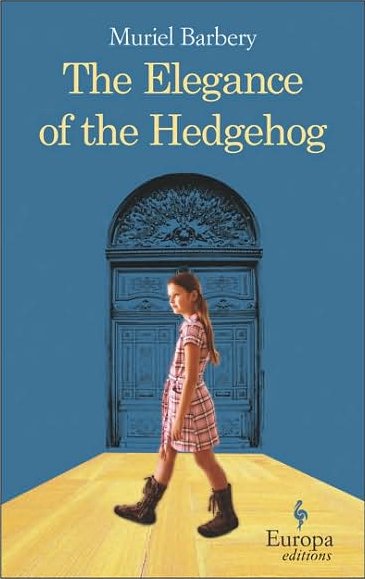
The Elegance of the Hedgehog by Muriel Barbery - By now, if you read through all of this, you can probably tell that I like books that are both really thoughtful, and that make you think. At first, I really liked this book for that reason. All of the characters are overly analytic. They are introverts and observers, and most of the book is a diary of their observations. I got so caught up in this thinking about and appreciating daily life nonsense that I found myself drinking tea and staring into space for over an hour once day. The main protagonist is studying critical theory and I was also studying critical theory as I read it, so it was interesting to see it described differently. But in reality, who wants to read a novel where a character is reading about phenomenonism, or whatever it's called. Those theories are interesting, but also really boring. You don't want to be reading about them in your free time. And you definitely don't want to read about a character as she is literally studying and reading something. The other protagonist comes off at first as a misunderstood prodigy, but then turns into a spoiled brat. And not to spoil it too much (SPOILER ALERT), but the studying-critical-theory-and-drinking-tea protagonist, who is supposed to be the elegant hedgehog (what an underhanded compliment, by the way), dies at the end. Randomly, out of nowhere. For no good reason, except maybe to make the other characters in the book appreciate a person that they had overlooked previously. Whatever. WOULD NOT RECOMMEND. 

The Talented Mr. Ripley by Patricia Highsmith - I read this book for my American noir class, but I enjoyed it. It's longer than other noir books we had to read, and much slower paced. Probably the most fascinating thing about it, especially in comparison with the other books I read, was that it took place from the point of view of the killer. Most of the book is filled with tension and suspense, so don't be put off when I say it is slower paced (I meant that relatively). You never really feel sympathetic to the protagonist, but he's also very fascinating. For example, one of the readings that people frequently come away with (mostly because the movie based on this novel made it this way in no uncertain terms) is that the protagonist is gay. This means that a lot of his crimes comes from unrequited love, as opposed to the alternative where the motivation is because Mr. Ripley hates being lower-classed and looked over. Either way, the psychology behind this serial killer is really interesting. It was also nice to finally see a female writer after all the Dashiell Hammets and and Raymond Chandlers. WOULD RECOMMEND.

Monday, January 7, 2013

Day 1

Today I'd like to write about my life a little bit.

I graduated last month with an English B.A. I spent as much time as I could last semester applying for jobs: a grueling process. I had very few good options because the field I want to go into - writing and editing - is pretty limited. Any jobs I applied for that would help me further my career needed more experience than I had. I had a few interviews with jobs that I considered fallback, but they either didn't go anywhere or were for positions that were much less promising than originally seemed.

I hate feeling like I have to settle for work that I will be unhappy at. But also, I hate feeling like my husband, who is a student, will have all the pressure of earning an income for both of us.

I'm trying my best to stay positive about starting this process over again. Last semester was absolutely terrible (car crashes, wedding planning, looking for an apartment and then moving into it, etc.), but after a long vacation, an amazing wedding, and a great honeymoon, this semester (can I call it a "semester" when I'm not a student?) is looking much better.

A few goals I'm trying to keep while job-hunting:

  1. Waking up (and staying up) every morning when Colby does.
  2. Wearing pants until Colby comes home from work/school.
  3. Always being optimistic.
  4. Working on job-hunting every day, but also pacing myself so I don't get burned out/depressed. 
  5. Being productive with other things when I'm not working on job hunting (i.e. household chores, thank you cards, etc.)
However, if you are in need of a passionate and above-average writer and practiced editor, please feel free to put me out of my misery.