Since it is summer and I have all the time in the world, I decided to spend my time reading more feminist books. I'm not in school anymore, so I really don't have very many scholarly feminist articles to read anymore. And while not all of the books I've read are strictly scholarly, they have helped me to understand feminism a little bit more.
Bossypants by Tina Fey - The reason why I love this book is because it is how one woman has taken feminism and interpreted it in her daily life. I think lots of women can relate to her experiences of learning about being a woman in this patriarchal world and how feminism fits into things for her personally. Of course, this is not intersectional feminism - Tina has a lot of white, heterosexual, cis, etc. privilege, and she does not address that. But a lot of feminists are in the same position (like myself), and that doesn't make any of the issues she's dealing with less important. Though it does mean that you, as a reader, should probably be aware of the lack of intersectionality while reading it. How to Be a Woman by Caitlin Moran - Similar to Bossypants, this book/memoir is another personal interpretation of feminism. It is not deep feminism or even the bottom line of feminism. But it does do a good job of showing everyday sexisms and how one woman interprets the events around her. I think for both books we can learn that it's okay for feminists to make mistakes and not be perfectly feminist-y; that standing up against sexism isn't always clearcut and can be very difficult; and that many events in our lives are actually subtle sexism. I also loved the way Caitlin treated childbirth in this book.
I've also written about Bossypants and How to Be a Womanhere.
Founding Mothers by Cokie Roberts - So this book is pure history. And sometimes that can be kind of dry and hard to get through. But also, the lives of these women are FASCINATING. As feminists, it is important that we try to rewrite history with the women included. As it is right now, history is dominated by male figures, and the women are completely ignored. But women existed! We can't just assume that they were all gossiping and sewing, completely ignorant to what was going on outside of the sphere of the home. This book shows that women played an important part in founding the country, from Eliza Lucas who single-handedly made indigo a cash crop in the South to Mercy Warren who greatly inspired the rebellion against England through plays and poetry. Without women, we wouldn't have this country, even if they weren't always on the battlefront. We need to remember that.
Click: When We Knew We Were Feminists edited by Courtney E. Martin and J. Courtney Sullivan -
This book is a collection of essays by different feminists describing the moment when feminism "clicked" for them. Men and women from all different kinds of backgrounds discuss the parts of their lives that lead them to embracing the label of "feminism." They discuss what they do and don't like about the feminist movement as a whole. They explore what being a woman means to them, the female figures in their lives, and their personal stake within feminism. I think it's a great read because sometimes emerging feminists can get anxiety over the fact that their origins in feminism were for selfish reasons. We don't always think about rape victims or child brides in developing countries. We generally start out with rejecting the sexism that immediately affects us. And that's okay. I do think it is important to have a kind of selfish stake in feminism, as well as being aware that it extends beyond you to all the other women in the world.
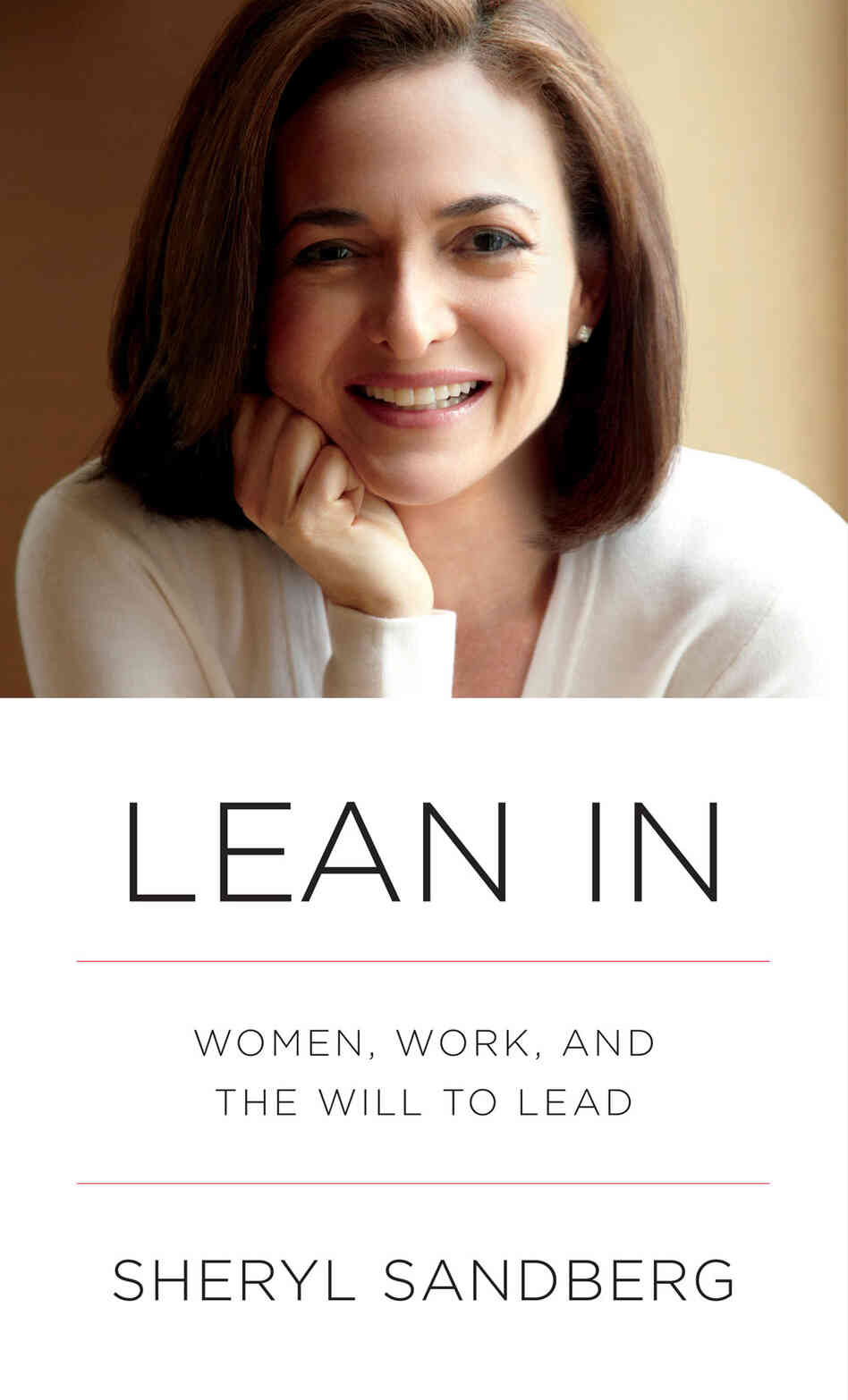
Lean In by Sheryl Sandberg - This book has been pretty famous this year. Sheryl Sandberg is currently the COO of Facebook, which is HUGE. I absolutely love Facebook, by the way. But she's also an awesome person because she's helping to shatter the glass ceiling in the tech industry, as well as by being high-up administrator. Lean In discusses the reason why women now outnumber men in terms of college graduates, but still are not CEOs or very high up in business hierarchies. What I liked about this book is that it discussed societal issues, but also had some practical solutions for women (and men) to do. It made me feel very empowered, especially since I had just started my new job when I read it. Again, this book has been criticized for being "white" feminism. Most women in this country aren't even in a position to take Sandberg's advice of Leaning In. I guess I'm technically not either since I'm in an entry-level position. But I would absolutely recommend it for any working woman.
Summer is over! Looking back at these books, I've realized that they are all pretty ... white. Click is the only exception, but even then I believe it was dominated by white women with a few great chapters by women of color.
I do have a good reason for this, though! I was actually halfway through Saving Fish from Drowning by Amy Tan (see! Not just white women) when I got distracted by the Game of Thrones books. Can you really blame me for getting sucked into those???
Next time I do a feminist reading stint, I'll make sure to include more women of color.
So hey everyone. Sorry I haven't posted in a while. To tell you the truth, my sister actually found my blog. I'm not open about this blog because, honestly, being a Mormon feminist is difficult. She didn't really approve, confirming the need for me to be discreet.
But the thing is, I'm a writer and I'm opinionated and passionate. I have lots of feelings and I cope with them by writing them out.
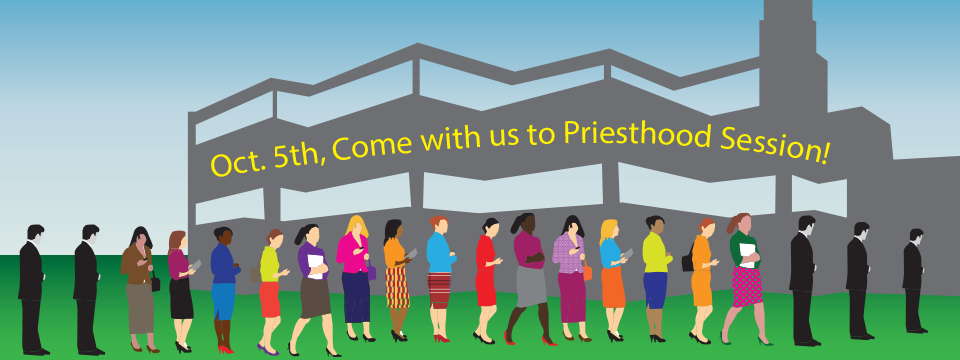
There's been a lot of fuss among Mormons on the Internet lately about Ordain Women. The leaders of OW decided to bring more attention to their cause by hosting an event where they wait in line at the Priesthood session of this October's General Conference. This is because women have never been allowed into the session before, despite it being broadcast and shared publicly after the event. Also, because they see themselves as future priesthood holders. You can read more about the event here. And probably some other locations.
Of course, many Mormons are in an uproar against this. They've flocked to Facebook to tell OW and Mormon feminists how unrighteous and wrong we are. And I'm getting really sick of it. First of all, they are being extremely rude, divisive, and not at all Christlike. Which is pretty ironic considering that they're calling us "apostates." But also, their arguments are completely illogical, offensive, and just plain wrong.
So I've decided to tear apart some of these awful arguments, one blog post at a time. (I should probably preface this by saying that while I have no interest in obtaining the priesthood for myself, I support the efforts of OW and find it absolutely ridiculous that people are so vehemently against it. I mean really, why can't we even entertain the notion?)
Here's the first argument I've been hearing:
"If women get the priesthood, they will have no need for men. Women shouldn't get the priesthood because they should depend on men."
These are two different arguments, but they essentially amount to the same idea. Women should need men and if they have the priesthood, they won't.
This argument is wrong for a few different reasons. I'm sure if the people making this argument really thought it through, they would realize how illogical it is.
The idea that women wouldn't need men would supposedly have two manifestations:
Wives wouldn't need men in their marriage or as a father to their children.
Women wouldn't need men to help run the Church.
The problem with #1 is that women do not marry men for their priesthood. Women marry men because they love them. Women and men complement each other not because one is a priesthood holder while the other is a nurturer, but because they are both individuals with unique attributes.
I'm gonna use my marriage as an example because that's what I've got. My husband and I complement each other in many ways. One of them is that I tend to get passionate and angry much more easily than he does. He's more even-tempered. Neither of those attributes have to do with our sex - come on, guys, we've all seen hot-tempered men and women!
The other issue with #1 is that most women in the world aren't married to men who hold the priesthood. Even many LDS women have husbands that have never been members or are inactive. Most of those women still need their husbands, even though they don't hold the priesthood. They still have very happy, functional marriages.
This is also a very sad argument to me. I really hope the women (and men) who use this argument as a reason why women shouldn't receive the priesthood don't really mean it. They may not realize it, but when people use this argument, it makes it sound like the only reason why they are married is for their husband's priesthood authority. What would happen if their husband became inactive and no longer had his former priesthood authority? Would the wife leave him? And for men who use this argument - do you really want your wife to think of you this way? Do you really want a wife who is spiritually dependent on you, rather than able to have her own spirituality?
Now to #2. Again, an out-of-church comparison makes this one fall apart. The Church is an organization, much like a business. Probably moreso like a business than most other churches. And businesses all function with both men and women. Sometimes women are the bosses and the authority figures, often the men are. Either way, businesses absolutely need people of both sexes to help it run to its best capacity.
If women were to be ordained in the future, men would not be kicked out of the Church. They would not stand around with nothing to do while women covered everything. Men and women would work together, both holding about half of the callings, doing half of the work, and having half of the authority.
Essentially what this argument amounts to for me is "woman, know thy place."
I have no problem with a member of the Church believing that women are not meant to receive the priesthood at this time, or ever. However, there are absolutely no good arguments against it. I'm okay with anyone who thinks that we just have to trust in the Lord, but I'm not okay with anyone who does any sort of mental gymnastics in an attempt to come up with any sort of reason for why women don't and never should have the priesthood.
I had an uncle-in-law who simply and authoritatively said to me "not gonna happen" when I told him about the existence of OW. It annoyed me that he said it that way, but I also appreciated that he didn't have any sort of argument against it.
I repeat: We don't currently know why women don't have the priesthood. That is something Heavenly Father has never revealed to us. Therefore, there is no good argument against it other than "it just is."
I hope you can appreciate that and understand that. If not, well, then, even though it is tough to be a Mormon feminist, I have pretty thick skin.
Today I want to talk about teh menz. Men in feminism
are great. I really admire them and have had some really great discussions with
them.
But there’s also a problem with male allies. They
tend to have the “white knight” complex more than they should. What this means
is that they’d rather say they are a feminist in order to impress somebody (I
really don’t know who. Potential romantic partners? Themselves?) than actually BE
feminists.
Because being a feminist means a lot more than
saying you’re a feminist. I wrote this post about how not every feminist should
feel the need to be a super marching, protesting activist. That’s still true.
But even if you aren't sticking it to the man is in a very obvious and dramatic
way, there are still small ways that you need to do it. More than BEING a
feminist, you need to actively make the world more feminist in some way.
So what do I even mean? How does one strike the
balance between activist and small efforts?
For one, you need to live your life in a more
feminist way. This will mean different things for different people, and it’s up
to you to determine what that will look like in your own life. It’s not enough
to say that men can often treat women terribly, or that women should be treated
better by society in general. Yes, admitting that women are oppressed is the first
step. The next is working against it.
How, you ask? These are a few suggestions:
Men:
Examine the balance of housework between
you and your wife/partner. Splitting it 50/50 isn’t the answer for every
circumstance, but are you doing your fair share? Do you avoid tasks that don’t
seem like “men’s work”? Does your wife/partner pick up the slack most of the
time? If so, it’s time for you to actively rearrange your situation. (By “actively,”
I mean discussing it with her and agreeing on it, not just making a resolution
to do better.)
Same thing with childcare.
Do you speak out when your dudebros say
offensive or sexist things? If not, you are helping perpetuate the problem.
When you are on the streets, in a bar,
or other situation, do you actively work to make sure the women around you feel
safe? This doesn’t mean being chivalrous. What I mean is, if a woman is walking
alone at night, cross the road and walk on the other side of the street so she
doesn’t feel threatened by you. Seriously, you need to do that, because every woman is going to view you as a potential rapist whether you deserve it or not.
Do you actively work to make women more
comfortable in the workplace? This means not interrupting them,
encouraging/allowing them to speak out, creating better conditions for women,
speaking up when dudebros say sexist things, and mentoring them. Check out “Lean
In” by Sharyl Sandberg for more tips on that.
Listen more. Do not dismiss the
experiences of women. Pause before speaking up.
Women:
Let men do all of the above things.
Sometimes, women also have a hard time letting go of the status quo. It can
sometimes be difficult for women to hand over the fair share of housework to
men because they like the level of control they feel, or they don’t trust men
to do it right. That’s dumb. Let it go. Let him make mistakes. Similarly, women
don’t always want to give up the benefits that chivalry gives them. I’ll admit
that I've felt special before when a guy opens a car door for me, or a group of
men stand up when I walk into a room. I don’t anymore, because I hate chivalry.
But I understand that feeling.
Demand that men do the above things. You
absolutely cannot wait for men to figure it out by themselves. Why would
anybody do that? If you are unhappy with your present circumstances, speak up
about it. No, you don’t want to be accusatory or call them a huge flaming ball
of suckfest. But an open, honest discussion about your feelings is necessary. (“Demand”
may be the wrong word because I do think that, lots of the time, you should be
nice about this. But I’m keeping it because what I mean is that you shouldn't give up or settle for less. Stay firm in your stance and resilient in your
efforts to get it.)
Really, this is all the tip of the iceberg. I could
probably go on forever talking about ways that we can all work towards a
better, more women-friendly world. Many other blogs have done so in a much
better way than I have. I just needed to vent about the men who are feminist
only in name, and not in action.
Do you have any experiences where this has happened
to you? Do you have any other suggestions? Feel free to share!
Hey everyone! I haven't written in a while because I finally got a job! It's pretty exciting, especially since I actually got a job in my field that I LOVE. Which means that I generally get all of my need to write satiated at work.
I've been reading Lean In by Sharyl Sandberg (finally!). Really, everyone should check this book out. I've seen some criticisms of it, but overall, it is a genius book. Women and men can really benefit from what she has to say.
I'm all hopped up on empowering feminist juices from reading it. Which is one reason I really love feminism, by the way - it's so empowering! I really feel like I can conquer the world after reading feminist books like this one. So I start thinking, everyone I know should read this. My little sister, who is also growing into feminism, should definitely read this. You see, I kind of feel like a feminist mentor to my sister. Obviously, I'm not the ultimate feminist, but I know much more about it than she does. And she's not as eager to dive into the deep end as I am.
To be honest, my sister began embracing feminism because of me. I'm not saying this to brag or anything. I started a Pinterest board dedicated to feminism, and she saw the images. Some of the things I shared about fat-shaming and body acceptance really spoke to her. She decided to reject all of the societal pressures that made her feel inadequate when it came to her appearance (it's a journey, of course, but that decision is the first and most important step). Eventually, after learning that she liked this part of feminism, she slowly started to listen to and adopt others.
She is not the only one. I'm obviously not a huge star on the Internet, but I can say that I have influenced others to similarly embrace or publicize their feminism. I have had two women actually tell me this, thanking me for my bravery in sharing feminist messages online. I've seen a few other women who are following me start their own Pinterest boards dedicated to feminism, re-pinning some of the material that I first pinned.
Again, not bragging - I'm not sure if my addiction to social media is something to brag about (though it did help me get my job!). But there are two takeaway messages in this random post:
Share your feminism! I promise it'll be worth it. It hasn't always been easy to me - I've had people argue with me over the things I've posted, people stop following me, old acquaintances see me in a different light, etc. But I feel that the few people I have influenced are worth it.
Online activism is important. It may not be as dramatic or difficult as marching in the streets, but it can be very powerful in a different way. Sometimes, people aren't going to be swayed by protestors, though they make a very impacting statement. But you will be able to reach those who are open to new ideas, if only the ideas are presented in the right way for them to digest. Really, there's a lot more someone can learn from reading an article or personal experience than a demonstration. Not to put down traditional activists - they are, of course, doing amazing and awe-inspiring work. I'm just saying that not all of us are cut out for doing that kind of thing, and we shouldn't feel guilty because we can do amazing things digitally.
So be a feminist! Share the empowerment with other women!
Lately, in my internet sphere, there has been this kind of "war" about modesty. There are those who say modesty is important because it shows self-respect and keeps a man from having sexual thoughts about you - and there are those who say that modesty is all well and good, but doing it for the sake of others' is not the right way to go about it.
I think you can guess by now that I'm clearly in the second camp. I wrote about it last year here. You should also check out this great post by another Mormon feminist here; this one is responding to a video that's been making the rounds by Jessica Rey, creator of a "modest" swimsuit line.
One comment the above blog post ("To Every One That Believeth." Not my blog.) was something about what we were "says" something to everyone around us.
Actually, what she said was this:
Of course, I replied something snarky and said she must be exhausted all of the time from "evaluating" and "assessing" people. Although, I truly believe that this lifestyle does sound exhausting. You're already running errands, working, going to school, and trying to have fun - so while you're doing that, you're also turning your head every way to look at people, see what they're wearing, and judge them based on something as shallow as their clothing?
The idea that a person "says" something with their clothing comes from pure commercialization. When you shop at Urban Outfitters, you're saying you're quirky and a hipster. When you shop at American Eagle, you're saying that you're preppy. But who decides that? The stores do. The commercials do. The commercials convince you that you need to represent yourself a certain way, specifically their way. And that way, you aren't going from store to store finding items that you like, but you're staying at one store and spending all of your money there. They've got you hooked.
And are we really "saying" something with our clothes when we all shop at the same prescribed stores anyway? A store produces thousands, millions of the same exact item every time it creates a new piece of clothing. The chances of you running into someone wearing the same shirt as you is actually pretty high. So why do we think that we're "saying" anything unique with our clothing when we clearly have very little say in it anyway?
Lastly, this is such an unreliable method to get to a decision anyway. Most of the time when you judge someone based on their clothing choices, you are wrong. What about the athletes who sexually assault women? The businessmen who embezzle? In my high school, a group of about 20 of the good-grade-honors-students-teachers'-favorites-athletes-who-got-into-good-colleges weren't allowed to walk at graduation because they got drunk on their way to prom and assaulted a police officer. Last week in the grocery store, despite the fact that my hair was a mess and I was wearing my cleaning clothes (and a wedding ring), I got hit on when I didn't want to. Most of the time when you try to "interpret" someone's clothing, you're going to get it wrong.
From there, it's a slippery slope into victim blaming. That woman was wearing a low cut shirt and short skirt, which we all know means that she's "saying" she wants sex, so isn't it her fault that someone decided to "listen" to her clothing and not her words? Doesn't that make it her fault she was raped?
No. It never does. Never ever ever.
The same thing applies to women in bikinis. This woman, and many other champions of "modesty," are presuming that a woman who wears a bikini is doing it for the sexual attention she will attract. What we should be doing is thinking that maybe a woman in a bikini is wearing it because that is what she is most comfortable in, and she really doesn't care who looks at her. It's a cliche, but there's also that expression that we don't wear makeup for men, but for ourselves. Same thing with bikinis.
Honestly, I really feel a lot of pity for this woman who posted the above comment. (Of course, I am judging her without meeting her and that's wrong, but ...) I can imagine that she is the type of woman who wakes up two hours before the crack of dawn because she can't stand to leave her house without her make up and hair done. And while many may think "oh, she's showing respect for those around her," really, she's just very insecure about herself.
So first of all, I won Diary of a Single Mormon Female as part of a contest over at Modern Mormon Men, and got a copy signed by the author, so thanks Aleesa! (I feel like we're on a first name basis after reading this. After all, I was basically reading her journals. We have to be pretty tight after that.) I was really excited to read this because I was expecting it to address a lot of the cultural issues of the Church, such as pushing marriage onto people and treating single adults as second thoughts. I was not disappointed on that count at all. I think Aleesa did a fabulous job demonstrating how harmful some aspects of Church culture can be.
I think the beginning of the book is a little slow. Part of this is because I didn't really need explanations of Johnny Lingo and fasting, seeing how I also grew up LDS. Those sections do make me wonder who the intended audience of this memoir is, or if her editor made her include it. (Who published this book? Did Aleesa do it herself? Wow, that's impressive.)
I also just didn't find her earlier journal entries that entertaining. I think part of the problem is that I feel like my experience literally mirrored hers. I absolutely had church boys that I had crushes on, and our relationships consisted entirely of my daydreams and the very minor interactions we had, which I would blow out of proportion. (Unlike Aleesa, I actually married my Jon ... Yup, I would totally stare at 12-year-old Colby as he passed the sacrament. Then write about it in my journals. Which I still have, and were a huge source of entertainment to my family after I got engaged to him.) It's an interesting phenomenon, and I'd like to see how many women who grew up in the Church have experienced something similar.
It definitely picked up for me after Aleesa turned 16-17 and actually started to date. Those experiences began to be different than mine. I'll try not to give any spoilers away here, but I was fascinated and horrified by who she was when she was going to BYU. I loved watching her grow, step-by-step, until she was the person at the end of the book. And I loved the end of the book. My favorite line is
"Church culture seems to dictate that life's trials can be discussed only in the past tense, hand in hand with the feel-good declaration that everything ended up working out just fine. Most people are very uncomfortable acknowledging doubt, anger, grief, despair or any of the other, less sparkly emotions. The injuction Christ gave his disciples to "be of good cheer" has been interpreted by many as the only legitimate state of being for a Mormon at any time - hence robust sales of Prozac in Utah" (218).
Emphasis is mine. I just feel like that's a really true part of the Church culture. We somehow are afraid of acknowledge doubt, even though you cannot have faith without questioning things.
So even though Aleesa's trials in this context revolve around being single and I am now married, I can still really relate to her emotions at the conclusion of this book. I think they are universal, despite her specific context. While I found the duration of this memoir entertaining and informative, it was the ending that really spoke to me.
Your book club
When did you start noticing boys? Were they boys from Church? Did you write about them in your journal?
How did Aleesa's religious beliefs affect her interactions and attitudes towards boys? Have you had similar experiences with church lessons that revolve around future companions? Have you had any experiences with marriage being taught in different ways or frequencies to the teenage girls than the boys?
What do you think of Aleesa's time at BYU? What was her outlook and attitude like during that entire experience? Do you think that outlook/attitude is common (especially among BYU students)? How did she describe the men in her life? What do you think, if anything, went wrong? Did you see any sort of pattern or similarities between all of her crushes (other than them not working out)? Do you think Aleesa's attitudes affected her dating life? In what ways did Aleesa grow during her time at BYU?
What do you think about Aleesa's relationship with Hugh (her first boyfriend)? Have you had a similar type of relationship?
Aleesa frequently talks about "potential" with the men she has a crush on. Is this outlook on dating normal or unusual? Do you ever think that way? Do you think it's an effective method? (Read the first paragraph on page 137 about Sam.)
On pages 141-142, Aleesa and her friends start discussing sex. Does her experience of learning about sex reflect yours? Do you agree with her about the ways she wishes the topic of sex was taught?
On page 171, Aleesa comments that some of the teachings of the Church on dating can be contradictory and confusing. Do you agree? What are some things you'd like to see changed?
How does Aleesa represent the men of the LDS church? Do you feel this is a fair representation?
Aleesa sticks to her standard of only wanting to marry LDS men, even though it meant giving up Boris and Amir. What do you think of this decision? Do you think things would've worked out between her and one of those men? Do you think she was being foolish and narrow-minded or strong and uncompromising (or maybe even a little of both)?
Do you agree with Aleesa's assessment on the way Church culture often treats trials, such as in the quote above? Have you ever had similar feelings or feelings that you felt weren't as "kosher" in the Church? Is there anyone you can talk to about these types of feelings?
BONUS QUESTION: If you are married, what are some better ways that you can interact with the single adults? What's something you can say other than "oh, you'll find someone some day"?
Yeah, sorry, I know that's a lot. The great thing about book clubs is that you get to pick and choose what you want to talk about! Some topics may not get a lot of response from the crowd, and some you may end up talking about for hours. Good luck! I hope you enjoyed Diary of a Single Mormon Female and any subsequent discussions!
I went to go see Oblivion (imdb.com) last week with Colby. He and I are both really into sci-fi. I thought it was a great movie, particularly as a post-apocalyptic sci-fi story. There was some beautiful imagery. There were a lot of cool inventions. The storyline was really great. I liked all the characters, including the female ones.
But then, I also have to analyze this movie as a feminist. Interestingly enough, it does pass The Bechdel Test. This is surprising considering that there is a male protagonist and the men generally have all of the violent, action roles. I think a woman picks up a gun and fires it twice in the movie, but only reluctantly (to protect a man in one instance and after another man has dropped the gun in the other). But it's a nice surprise. It's nice that even in a male-centered movie that women can have adequate (maybe?) representation. We just need to step it up by making tons more female-centered movies.
There were two things I noticed about this movie that I think you can find it lots of other movies as well. I don't think you could call them "tropes" exactly, because they aren't character molds. They're just situations that women are frequently found in. Warning - spoilers!
1. Nurturing/Protecting a Random Child - When a child fell down, it was a woman who picked him up and protected him from that point on. Julia was basically a random stranger to this colony of Earth survivors, but when one of their children is somehow separated from the group and left behind, she picks him up. Why doesn't someone else from this band of survivors protect the child? Doesn't he have any friends or neighbors who are interested in his welfare?
I've seen this happen in a few other movies. Katie Holmes does it in Batman Begins. The whole city is under a chemical attack that causes them to hallucinate. Holmes's character, Rachel Dawes, clutches to a random little boy that is for some unknown reason all on his own. (Interestingly, that boy happens to be a young Jack Gleeson, who plays King Joffrey in Game of Thrones.)
I actually can't think of any other movies, so I'm either brain farting or it's just a coincidence that these two movies have incidences of women protecting children during attacks. I don't think it is, though.
The reason why I don't like this is because it puts women in the role of natural nurturers. By having women who are not yet mothers slip into the role of pseudo-mother instinctually, you are saying that all women are potential mothers. This is a naturally accepted role. I wonder why in these movies you don't have men playing this protective part, or even just the child's own mother?
It also generally happens when the man is out doing hero stuff. Jack sacrifices himself as a kamikaze and Batman is off fighting villans. The women just stay out of the way until the fracas is over. This way, they won't get hurt.
I'm sure there are movies that do have men protecting random children, but I think we are meant to respond to that as an out-of-the-ordinary heroic, compassionate act, whereas women are treated as that being the norm.
But I don't have anything to back that up, so you can take it whatever way you'd like.
2. A Baby as a Consolation Prize - At the end of the movie, Jack Harper, the protagonist, and Julia, his love interest, plan to suicide bomb the aliens. Julia is put into "delta sleep," while Jack flies the spaceship. When Julia wakes up, she realizes that Jack has tricked her, and she is actually safe on Earth. Which really pisses me off. Julia volunteered to die with Jack, knowing full well what the consequences were! Who is he to make that decision for her? Anyway, we flash forward to five years later (or whatever), and now she has a daughter. Somehow during that time, Jack impregnated her. This is a frightening implication on its own because we are never aware of them having sex. I guess there's a possibility they had sex before she went into delta sleep the first time, or they did have consensual sex but we don't see it. I guess.
So even though Jack is dead, it's okay because Julia has a baby, who is supposed to be the next best thing. I guess you can see Jack in the child, or the child reminds her of Jack.
I know this has happened in LOTS of movies. It happens in Cold Mountain, where Nicole Kidman's character, Ada Monroe, has sex with her lover just before he is shot to death. Again, fast forward a few years, and she has a child.
It happened in Pirates of the Caribbean: At World's End. Jack is cursed to the point where he is only able to set foot on land once every ten years. His wife, Elizabeth, settles down alone on an island after a sex romp. Jack comes back ten years later, and now Elizabeth has a ten-year-old son.
It kind of happens in Superman Returns (2006). When Superman returns, he finds that Lois Lane (Kate Bosworth) now has a young child. We realize by the end of the movie that this is actually Superman's son, and not Lois's boyfriend's. So even though Superman didn't die and the baby wasn't the consolation prize revealed at the end of the movie, Lois was still left with a baby by herself for a number of years.
I'm not a fan of this occurrence either. It is insulting to both the male partner and the kids. Your lover cannot be replaced by a child, and a child isn't just a momento of someone you deeply loved. It's also insulting to the women: it's basically saying that they can get over the man if they only have a child. In Oblivion, Cold Mountain, and Pirates of the Caribbean: At World's End, the three mothers stop their adventurous lives and settle down into a domestic one. This is generally seen as much better and safer for them, and a sacrifice the male makes out of the purest most selfless love. It's even worse in Pirates because she's spending ten years waiting for this man while he's running off on adventures - the ultimate working dad who passes off all the childcare to his wife.
I understand that movies are made this way in order to make audiences less sad. There is more resolution in a movie that ends with this kind of bittersweet ending. And it is very tragically bittersweet - I felt lots of feels when watching (most) of these movies.
Both of these situations also have a degree of passivity in them. In the first one, women are standing in the sidelines after having been "given" the safest responsibility. In the second, women have no control over reproduction (I know that's historically accurate, but it doesn't stop it from sucking!).
I don't appreciate women being put in this situation over and over again, even in fiction. I believe it has all these implications for "real world" women, including being shuffled into the nurturing/mothering role without any regard for the previous strength and adventurous spirit these women once had. And without any regard to how they felt about the men in their lives before they lost them.
So anyway, if you agree or disagree, please let me know in the comments below! I would also love to hear it if you know of any other movies where these situations happen to women.
Being an English major has taught me that there are a number of ways that you can read the same book. It all comes down to the context in which you want to look at a text. You can look at a book historically, which generally means comparing it to other works that were written around the same time and seeing what they have in common. You can think about colonialism when reading a book, which often means themes of race relations or questions about savagery versus civilization (think Pocahontas).
Generally, a feminist novel is one that has a female protagonist and deals primarily with the relationships between women. (Do we apply The Bechdel Test to books? Comment and tell me your opinion.) But that doesn't mean we can't look at other kinds of books from a feminist perspective.
(It's also worth noting that a female character who isn't "strong" can still be a feminist novel. Sure, we feminists love a strong, kickass woman, but really, who doesn't? But that's also not realistic. Just as men aren't always strong - and many novels focus on the low and pathetic points of a man's life - women aren't always strong either. We can definitely have feminist novels where the women don't come out looking great.)
Reading Like a Feminist
When reading, ask some questions about the book.
Are there women in this book? Is the protagonist or antagonist a woman?
What is the relationship women have to men? Are they primarily girlfriends, wives, daughters, mothers, sisters? Do you experience female characters outside of their relationship to men?
How do men treat women in this book? Does it seem like the book or narrator condemns or condones the actions of men towards women?
Do the female characters seem realistic and fleshed-out to you? Do they experience growth or learn any lessons? Do they change in any way?
If this is a historical book, are the roles and actions of women much different than they are now? Do they women have anything to say about their roles? Do the men? Does the book take time to point out how the roles of women back then are different from women today?
If there are multiple female characters in the book, are they different from each other? Do they have different personalities and make different life choices?
Do women come out looking good or bad?
Do the female characters drive the plot of the novel at all?
Are the female characters passive or active? Are they acted upon or do they do the acting?
Is the author of this book male or female? Do you think that the sex of the author somehow colors the way they write about men and women?
Are the female characters dependent on men?
As a feminist, what do you like about the book? What do you dislike? (This is different from asking you what you like and dislike about the book generally. You are allowed to love any kind of entertainment or literature that makes the feminist in you angry.)
An Example
Let's use the Harry Potter books as an example, since almost everybody has (or really, REALLY should have) read those.
Harry Potter is obviously about a male character. There seems to be an equal balance of male and female characters (but I haven't actually counted, so there could be more men than women). Harry, as a character, has varying relationships with all sorts of women. These female characters have a large range of diversity, displaying traditional femininity, vapidness, intelligence, athleticism, loyalty, cruelty, kindness, villainy, determination, heroics, etc. They all (for the most part) have distinct personalities from each other. Many of the more important female characters have both strengths and weaknesses, and they change over the series, making them round, fleshed-out characters. While they all have men in their lives, none of them seem to be dependent on men, and they are all generally pretty active.
So even though this is a book with a male lead (and a male antagonist), we can still look at the women within the story. There may not be a ton to glean from different books about the female characters (because LOTS of books center on men), but it is always possible to pick out little bits and pieces.
Go try this and tell me how your experiences turn out. If you can think of any more helpful questions to ask yourself when reading, please comment below and tell me!
I just read Tina Fey's Bossypants and Caitlin Moran's How to Be a Woman back to back. The funny thing is, they really are very similar. On the cover of Caitlin's book, someone has reviewed it as "the British Bossypants," and it's true! They both talk about the horrors of puberty, being a woman in a male-dominated workplace, their family, and their experiences as mothers.
The thing I like about both these books, besides being hilarious and easy to relate to, is that they're both gateway drugs into feminism. I mean that in the best way, of course. They are two individuals' experiences with feminism. Because it's so easy to understand, these books are a great introduction to feminism.
They aren't, however, the bottom line of feminism. Tina Fey has been criticized for this one line she has about how beauty standards have evolved to the point where one woman is expected to have body parts from all sorts of ethnicities. The way she comes across in the line is derogatory to women of color, or so I have read from women of color (I didn't find it offensive at first, but that could easily be my white privilege. It might also be that I read it differently than those critics did). I didn't like that both of them criticized other female celebrities, though the reasoning behind it made sense.
So while the books aren't hardcore feminism, or even inclusive, intersectional feminism, they are brilliant, funny, lighthearted, and have some great criticisms of everyday sexisms.
Your book club
Because these books are both very personal, your book club might get very personal too when talking about these books. It might just turn into story time. But that's okay! I think that's the point of both of these books, and that's what reading them encourages.
Here are some questions that will hopefully bring about awesome discussions in your feminist book club:
Talk about your experiences with puberty. Did your parents give you "the talk"? What are some conversations you had about growing up with siblings or friends?
In Caitlin's book, she talks about what we call our private body parts. Do you think the names we use for our breasts and vagina are important? What are some of the names you hear that you do or don't like?
What are some of the beauty standards you come up against? How have you had to fight them and learn to accept your body? Do you still struggle with some of them?
Both Tina and Caitlin have mentioned gay friends that they had. What do you think of their relationships with people who are homosexual? How do you think the gay community and feminism relate to each other? Can gay men understand some of the experiences of women in the patriarchy? (You could also talk about lesbian women in this discussion, but this is also a REALLY BIG discussion. You might have to try to reign it in.)
Both Tina and Caitlin use humor to talk about feminism. Tina even uses humor to bring feminist issues to a national audience. How does using humor help feminist causes? You could use rape jokes as an example in this discussion.
Both Tina and Caitlin have experienced sexism in the workplace. Both of them have had to fight for more female representation in male-dominated industries. How do you think things have changed for women as comedians and musicians? Are we making progress in those two fields? You might also want to share some experiences you have had in your own workplaces.
Caitlin describes her first experience of being in love with Courtney. It's obviously an awful relationship, and Caitlin seems to know that, but she sticks with it. Why does she stay with Courtney for so long? Have you had a similar experience? Why was it so important for Caitlin to be in love?
What do you think of Caitlin visiting a strip club? What are your personal feminist views on women working in the sex industry? Do you agree with Caitlin's conclusions?
Caitlin describes her wedding and all the issues she has with the wedding industry. Do you agree with her? Did you have problems with your wedding, or have you been in a similar situation as her sister, Caz?
Tina Fey tells a story about Amy Poehler saying to Jimmy Fallon "I don't care if you fucking like it." Talk about that. Talk about male privilege, too.
Both Tina and Caitlin talk about motherhood, as well as how they bring their feminist outlook to motherhood. If you are a mother, talk about how you try to bring feminist ideals to raising your child. If you aren't, you can bring up goals you have for raising children in a feminist way. Is motherhood a feminist act? (Discuss Caitlin's chapter about giving birth for the first time. I absolutely loved that part. She made giving birth seem so empowering, like a she-warrior.)
Talk about Caitlin's chapter on abortion. Do you want children? Do you think not having children is a feminist act?
Both Tina and Caitlin are white, mostly middle-class feminists living in developed countries. Discuss some of the privilege that comes with that, and maybe some of the privilege you saw in Tina and Caitlin.
Now that you've read both books ... which one did you like better and why?
So there's a lot in there. SORRY. You could probably talk an entire 24 hours if you went thoroughly through every one of those questions. So just pick and choose what you and your book club will probably like.
So, I haven't written in a while, and I'm sorry about that. Things get crazy sometimes.
While you're here, check out THIS. It's a link to an interview I did with SLC feminist on MormonFeminist.org and being a Mormon feminist. Also, SLC feminist is an awesome blog run by an extremely cool person.
I wanted to talk about a problem/criticism I've been seeing a lot lately. Mostly, I've seen it in context with the idea of ordaining women (http://ordainwomen.org/). And it mainly comes from Mormons who don't understand what the purpose of Ordain Women is or what Mormon feminism is.
They seem to think that we want men and women to be exactly the same. I had an LDS woman (who will remain anonymous) recently say to me
"i think that there are specific qualities that Heavenly Father has blessed men and women with that compliment each other in their roles as family members. if He wanted one person to be able to make a family, He would have made one person. but He didn't, he made two different people that when together can make a family."
I've heard this a lot in various forms. Mostly commonly, I hear "equal does not mean exactly the same."
I'm not sure where this idea comes from that feminists want men and women to be exactly the same. I would say that I agree that equal does not mean exactly the same. Let's take the Civil Rights movement - everyone, no matter what color, was allowed to go to the same schools, have the same resources, have the same jobs, etc., but not every single person decided to make the same exact choices.
What feminists want is not for men and women to be exactly the same, but for society/religion/other outside influences to stop dictating what it is that men and women should be doing. For instance, in LDS culture, the man is the provider while the woman is the nurturer. LDS members who play into this idea usually believe that married couples are equal partners with very separate responsibilities.
Mormon feminists believe that men and women should not be forced into these very narrow roles. What about the men who want to be nurturers and the women who want to be providers? What about the women who do not feel like nurturing comes naturally to them, and vice versa?
I love the fact that I'm a woman. I love my breasts and curvy hips and vagina. I like not having a penis and testicles. I love the relationships I have with other women and the power I feel I have as a woman. I hope to learn more about the spiritual nature of being a woman (of which I do believe growing a fetus inside of me can be a part). Because of my patriarchal blessing, I believe that my spirit has been anatomically female for as long as it has existed. I believe I will continue being anatomically female after I die (which is a very Mormon belief, I know).
I know that I have many talents, gifts, strengths, and weaknesses. But I also don't believe that any of those are inherently tied to my gender. I am not a good writer, friend, scholar, and leader because I am a woman - I am all of those things because I'm an individual human being. My husband has many of the same gifts and strengths as me, but also some very different ones. This is also not because he is a man, but because he is an individual. Together, we will make an awesome family because we do not see each other in categories, but as individuals.
So what Mormon feminists want is for you to stop saying that women are going to be better nurturers naturally while men are better providers naturally. Especially since this isn't always true. I myself do not feel comfortable around children at this point in my life. My husband, however, is great with kids, because he can make silly faces and do the funny voices. Telling me that I should be a natural nurturer is basically telling me that something is wrong with me. Which I don't believe.
We don't believe that men and women will morph into some androgynous or Barbie-doll-smooth-down-there mass if you get rid of gender roles. I don't think anybody wants that to happen.
We do believe that men and women will both benefit from the freedom of being able to make life and family choices based off of what their personal strengths and weaknesses are. And Mormon feminists do believe that it is important for couples to complement each other!
I understand that this idea might be confusing (and I'm not always the best at articulating, especially in a blog). Please, if you have any questions, feel free to comment below.
Such an exciting weekend! So many things happened!!! And I was able to stay in my pjs in bed for all of them!
So first, TWO women prayed in General Conference!!! All you naysayers better shut up, because the bottom line here is that WOMEN PRAYED IN GENERAL CONFERENCE FOR THE FIRST TIME IN ALL OF RECORDED CHURCH HISTORY. There are still some critics yelling at the contributors to the Let Women Pray movement about how we don't understand revelation, how the pray-ers were selected months ago, how God decides things and not us, blah blah blah. It's all a bunch of negativity, and whether or not those commenters are intending to, they're really tearing us down. Choosing to ignore and just celebrate.
Let's get a picture in here:
Second, a project I've been a part of just kicked off this weekend! The project is "I'm a Mormon feminist." We put together a website, http://mormonfeminist.org/, and we are gathering lots of submissions. We have pictures of Mormon feminists holding signs, profiles featuring Mormon feminists, and videos of Mormon feminists telling their stories. It's all pretty exciting.
If you want to extra support us, we also have a Facebook page, Twitter account, Pinterest account, and YouTube channel. We're all over the place!!!
Like and share all of our stuff to spread the word!!!
This is me!!! And I am awesome!!!
And lastly: I was a guest blogger over at Young Mormon Feminists, which is just about the coolest thing ever. Young Mormon Feminists was one of my first introduction to Mormon feminism, and I really love them and everything they do.
I think one of the reasons why I'm a
feminist is because I'm also very much an introvert. It's not obvious
right away, but feminism actually tells you that it's okay to be an
introvert. Here is a list of ways that feminism is inclusive of
introverts.
I don't own this picture. Feel free to yell at me if it is yours.
1. Feminism teaches you that you do
not have to talk to strangers if you don't want to. Especially men.
You do not owe them anything, particularly not your comfort. You do
not have to stand there and pretend to be nice. You can say, “I
have to go,” or “I don't want to talk right now.” In response,
the stranger might call you a bitch, but you'll know deep down that
you aren't.
2. Have you ever hated it when
someone tells you to smile? Like, what's so inherently worthwhile
about a smile? Can't I sometimes be in a mood where I don't feel
like smiling? Feminism tells you that you don't have to smile for
anyone. You body is your own and is does not exist to please anyone
else – this applies to simple smiles as well as sexual acts.
People may think they're trying to brighten your day when they ask
you to smile, but really, it's just another form of objectification.
You do not exist to make anyone else happy.
3. What if a guy is hitting on you or
trying to flirt with you? Feminism encourages you to ditch that guy,
even if you have to be rude about it. Again, you don't owe him
anything, except maybe a little common curtesy. Even then, you don't
owe them common curtesy if they are being rude, overly aggressive,
or making you feel uncomfortable.
4. I sometimes feel bad if I'm not
being social enough, or if I think about how I don't have as many
friends as other people. I wonder what I'm doing wrong. I wonder
what's wrong with me that this comes so naturally to other people
and not to me. Feminism is constantly trying to fight against the
idea that there is one societal standard for how to act. Generally,
they are fighting against gender roles, over-sexualization, modesty
police, and other societal expectations, but the same logic still
applies to introverts. You do not have to be extroverted. You should
not feel bad because you are different from other people. Embrace
who you truly are when society isn't telling you who to be!
5. Feminists believe there shouldn't
be one standard for attractiveness. This applies to how you
physically look, such as facial features, body weight, body hair,
etc., but also applies to how you behave. You should not have to be
overly flirty and friendly or hyper sexual in your actions to be
attractive. If it isn't natural to you to behave that way, then
don't. You're still attractive. Women and men who are super flirty
and friendly are also attractive. There is no one way to act that
makes you more attractive than others – unless you're like, being
a racist dick or something.
6. Sometimes, being an introvert
means you dress a certain way. Obviously, not all introverts dress a
specific way. But sometimes I dress in a way that reflects the fact
that I don't want any social interactions. Or just because it's
comfortable. Feminism tells me that it's okay not to dress
hyper-feminine, super fancy, or the way everyone else is dressing.
Feminism also tells me it is okay to dress that way when I feel like
it! I do not feel the need for makeup, doing my hair, or
semi-presentable clothing most days. Some days, I don't even feel
like getting out of my pajama pants. Whether or not that is a
symptom of introversion, I feel supported by feminism when I make
those choices.
To sum up, I believe that feminism
teaches me that it's okay to be me. Feminism encourages me to do
whatever the fuck makes me comfortable in my own skin. As an
introvert, I really love feminism!
I was really excited this Sunday when we were about to get a new manual. I'm a huge nerd! I like to have new books and new things to read. (And I like the smell and feel of paper ...)
It only took me a few pages to be disappointed by Family: Guidebook, which is published and distributed by the Church.
On page two, the manual talks about the organization of the family. I began to highlight the words used to describe fathers. Fathers "preside," have "power and authority," and "leads." He has strength, power, and authority within the family. His duties are to provide for the material necessities and spiritual needs of the family; to perform priesthood ordinances and remain worthy of holding the priesthood; and guide the family through spiritual activities. I was going to compare my highlighted words with the words they used to describe mothers.
And then we get to the section on mothers:
"The mother is an equal partner and counselor to her husband. She helps him teach their children the laws of God. If there is no father in the home, the mother presides over the family" (page 3).
So while the father gets A FULL PAGE dedicated to his duties and responsibilities, mothers get one paragraph - 3 sentences. Along with that, every single one of those sentences has the father in them as well as the mother. There doesn't even seem to be the tired "mothers are nurturers" bit in there.
I'm happy that they included the "equal partners," but it doesn't seem to be demonstrated in this lesson book. I was really hurt reading this and feeling like mothers somehow didn't matter as much as the men did.
This is followed by another paragraph that combines fathers and mothers. If you are being generous, this brings the total up to 2 shared paragraphs that mothers have dedicated to them.
Why is this important?
Yeah, I know, this seems like a whole lot of a feminist getting upset over something relatively little.
But it is important. When the Church tells me that I am equal to men, that I have just as many duties and responsibilities as them, that I have the same amount of worth and importance, I would like to see them walk the walk and not just talk the talk. I don't feel important when I am regulated to two roles - wife and mother - and then one of those roles is being demonstrated as less important than the male counterpart (fatherhood). I have been told many, many times how important motherhood is - so why isn't it important in this manual that is supposed to guide how I work within my family?
Yes, this is just one tiny (seriously, it's only 26 pages) manual that are "more like guidelines anyway." But, actually, it really isn't. This is almost every manual, every lesson I have in Sunday School and Relief Society, the way many die-hard Mormons choose to live their lives just because the Church tells them to, and the attitude that has been completely adopted by the Church.
Bonus Round
This is a bonus round because it's been said before and I don't need to go into detail here. But I ABSOLUTELY HATE THE WORD "PRESIDE." A couple cannot be equal and also have one of them presiding at the same time.
(This lovely meme can be found, along with other brilliant ones, on Facebook here. Enjoy!)
I have a lot of LDS friends on Facebook. So when some article comes out saying that BYU is #1 for hots and smarts, it gets reposted 6 bajillion times. (Or just 6).
The article is here. Enjoy. Also, a shout out to BYU Idaho, who rank somewhere.
Of course, this is annoying, and LDS people frequently need to get over BYU. (That is an issue that has been addressed by Amen Already here. Definitely go check it out because she's pretty funny.) But what bothers me the most is this:
"Everyone at BYU is very attractive; I've yet to see an ugly person here. Thanks to the honor code, every guy is clean shaven and well groomed (no super long hair) and every girl is dressed modestly (not too much skin). Everyone is very friendly, and it's not uncommon to strike up a conversation with a perfect stranger. BYU is famous for beginning long-lasting relationships and marriages, so dating is greatly encouraged." Read more: http://www.businessinsider.com/colleges-where-students-are-hot-and-smart-2013-3?op=1#ixzz2OBpn6cGw
So everyone at BYU is attractive because they follow the honor code - because they are clean-shaven and don't show too much skin? (You can tell that this was written by BYU students, because very few people in the "secular" world would think not showing skin is attractive.)
Which comes to another idea prevalent in the LDS culture: Being righteous and obedient makes you more attractive.
I'm serious. People really believe this. It's somewhat addressed in another blog post I did on how femininity is viewed in Mormonism (here).
I recently recalled a historic meeting in Jerusalem about 17 years ago. It was regarding the lease for the land on which the Brigham Young University’s Jerusalem Center for Near Eastern Studies was later built. Before this lease could be signed, President Ezra Taft Benson and Elder Jeffrey R. Holland, then president of Brigham Young University, agreed with the Israeli government on behalf of the Church and the university not to proselyte in Israel. You might wonder why we agreed not to proselyte. We were required to do so in order to get the building permit to build that magnificent building which stands in the historic city of Jerusalem. To our knowledge the Church and BYU have scrupulously and honorably kept that nonproselyting commitment. After the lease had been signed, one of our friends insightfully remarked, “Oh, we know that you are not going to proselyte, but what are you going to do about the light that is in their eyes?” He was referring to our students who were studying in Israel.
What was that light in their eyes which was so obvious to our friend? The Lord Himself gives the answer: “And the light which shineth, which giveth you light, is through him who enlighteneth your eyes, which is the same light that quickeneth your understandings.”Where did that light come from? Again the Lord gives the answer: “I am the true light that lighteth every man that cometh into the world.”The Lord is the true light, “and the Spirit enlighteneth every man through the world, that hearkeneth to the voice of the Spirit.”This light shows in our countenances as well as in our eyes.
I've never seen such a light. (The idea of it "showing in our countenance" sounds Biblical poetry to me.) For a while, I believed that I can tell Mormons apart from non-Mormons. And to some degree, you can. But being in Utah means everyone adopts the same basic fashion choices, so unless you're tattooed with a neon green mohawk and showing cleavage, it's really not that easy to tell.
As great as being righteous or obedient is, it does not translate into attractiveness. Someone may find them to be attractive traits in another person (especially at BYU!), but that doesn't mean that being righteous or obedient makes you attractive.
I think the problem with this misconception is the shallowness of it all. As Christians, we are not supposed to be concerned with outward appearance as much as we are. It is especially manipulative to constantly be telling young teenagers and college students that they will be attractive if only they are righteous and obedient. Not fair, in my books.
This phenomenon also gives us permission to judge each other. Do you have enough light in your eyes? Are you attractive? No? Then you must also be a disobedient apostate.
It often turns out that this cultural aspect mainly affects women. Sure, you have here that clean-shaved men are more attractive than their bearded counterparts. But there's nothing in our culture that says not having a beard is righteous the same was being modest is. Facial hair does not reflect one's virtue the way modesty supposedly does. This is definitely obvious if you go read my post on femininity!!! Because, as lowly RMs all the way up to lofty apostles have said, a woman is only attractive if she is righteous and doing exactly what the Church culture tells her to do.
With the recent campaigns that have been going on (Pants, Let Women Pray, and now Ordain Women) lots of faithful LDS members seem to have forgotten how to be good christians (lower-case "c" is intentional). I know lots of people who have grown up with the Church a certain way all of their lives are confused about why some LDS women and men are unhappy with the current cultural climate. They wonder how so many people can be discontent with a belief system that has brought them so much joy, peace, and community.
But a lot of them are really terrible at expressing that. So, I have come up with a few guidelines for how to talk to someone who identifies as a Mormon feminist or just someone who supports these campaigns.
I don't know who made this, but it wasn't me, so all credit to that person.
1. Do Not make assumptions about them. Many people approach Mormon feminists with questions of why they want to be a man, why they want to have the priesthood, etc. There are a lot of things wrong with doing this. For one, it's extremely rude. You're forcing the feminist you are talking to to immediately go on the defensive. You're not going to get a good conversation out of this.
Another, you actually have no idea what a particular feminists grievances or goals are. Some Mormon Feminists want women to have the priesthood, some do not. Like general feminism, this is not one organized movement where every member thinks exactly the same. This is a broad spectrum where many feminists are different from one another, though they usually share the common goal of "equality." Equality, however, means different things for different people.
And lastly, quite a few Mormon feminists are men. Assuming that we are a bunch of angry women is discounting the large male population.
2. Do Not use sexist language. For years, women have been called "hysterical," "screeching," "crazy," "overreacting," and more. I saw a woman yesterday wondering why we all "had our panties in a bunch." Again, saying stuff like this is just plain rude and not going to contribute to a polite conversation. It's also being sexist, which is really not helping the problem. (And again, it's also awkward when you are addressing men, even if you don't realize you are.)
3. Do Not bring our testimonies or spirituality into question. So many times I've seen that if only we'd read the scriptures or prayed more, we'd find peace. This is another assumption. People who say this to us are assuming that we haven't prayed or read scriptures about it. Many Mormon feminists have been devout members their entire lives. They hold callings in their regions and raise religious families. Many of them have prayed and studied to find answers. Through a combination of revelation, scripture study, and studying what the prophets have written, they have come to the conclusion that activism is their answer.
Also, many of what the Mormon feminists are working against is not doctrinal. For example, in the Let Women Pray movement, there was no doctrinal foundation for a woman having never said a prayer in General Conference before. This is merely a cultural tradition, or a policy that did not necessarily have spiritual guidance in its creation. When it comes to dismantling cultural norms, I do not believe you need to have the strongest testimony or full activity in the Church.
This also includes not blasting Mormon feminists with scripture quotes or conference talks. Many of them are already aware of what you are trying to share with them. If you honestly are curious about what they think about a specific talk or quote, you may calmly and respectfully ask them. You should not just throw it at them.
4. Do Not tell them that the problem absolutely does not exist. This comes in many forms. There are women who say they are perfectly happy in the Church, so everyone else should be. There are people who like to point out to all the places where the Church/LDS culture excels from a feminist standpoint, so nothing else that goes against that exists. Whether or not you have seen or experienced an inequality or problem that one Mormon feminist sees does not matter. You could live in a great ward where things aren't as bad. You may not have experienced a certain issue that another Mormon feminist has.
5. Do Not tell a Mormon feminist to just leave if they are unhappy. This is not productive, and it is very dismissive of their feelings. People who grow up LDS often find they have a hard time leaving. Many Mormon feminists have a very strong testimony of gospel principles; they also don't want to leave all of the positive parts of the Church behind. Besides which, deciding whether or not to leave or stay is a very personal decision, and one that should not be made by you.
6. Do Not tell a Mormon feminist to "get a sense of humor," "get a life," or to not be so easily offended. Again, just because you think something is a funny joke and not at all offensive doesn't mean it's wrong if someone else does. Just because you think something is a non-issue doesn't mean someone else sees it the same way. These phrases are also very dismissive of someone's feelings. You're also making another assumption - many feminists have senses of humor and very full, enriching lives.
DO:
Listen. This should be really simple, but so many people seem to have forgotten this. Mormon feminism is new to a LOT of people. At first, it may seem contrary to a lot of things you have learn in Church your entire life. It is normal to be confused and to have questions. The best thing to do is to ask a Mormon feminist about it. You can ask them why they feel a certain way. You can ask them what their take is on a particular scripture or conference talk. You can ask them what their personal experiences have been with certain issues. You can ask them what they believe.
Mormon feminists want their voices to be heard and their thoughts to be shared. You do not have to agree with everything a Mormon feminist says, but you should engage with them in a polite and respectful manner.
If you have any questions/suggestions about how to talk to a Mormon feminist, please comment. If you have any questions about Mormon feminism, you can also comment, and I will do my best to answer or redirect you to a place with an answer.
_-_200px.jpeg/200px-Bossypants_Cover_(Tina_Fey)_-_200px.jpeg)






.jpeg)


